How to Build a Rainy-Season-Ready Team in the Philippines
A practical guide to employee safety, work suspension, remote-work continuity, communications and business resilience during the Philippine rainy season.

Permhunt Team

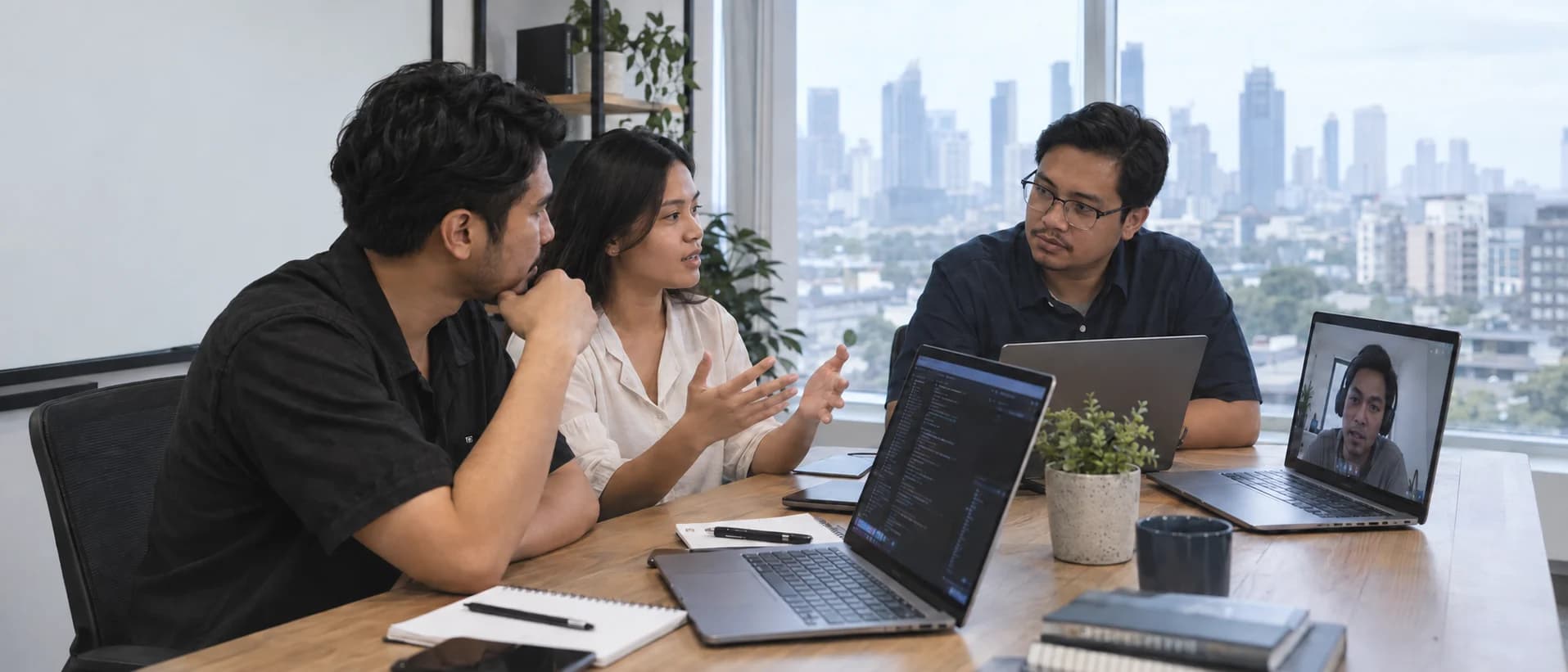
Rainy season in the Philippines can disrupt far more than the morning commute. Heavy rain, flooding, transport delays, power interruptions and unstable internet can quickly affect an onsite, hybrid or fully remote team.
A rainy-season-ready workplace is not one where everybody is expected to keep working regardless of the conditions. It is one where employees already know when to travel, when to stay home, where to look for updates, what happens if power or internet goes down, and which work actually matters if normal operations are disrupted.
That preparation is increasingly important from both a people and compliance perspective. Under DOLE Labor Advisory No. 15, Series of 2025, employers are expected to incorporate business continuity and disaster preparedness into their occupational safety and health programs and establish measures covering preparedness before, during and after disruptive events.
Why rainy-season preparedness matters for Philippine employers
For employers outside the Philippines, it can be easy to think of rainy-season planning as simply a question of whether a typhoon makes landfall. In practice, disruption can happen well before that point. Regular heavy rainfall can affect commuting routes, public transport, electricity, internet connections, suppliers and office accessibility.
A 2026 Philippine Institute for Development Studies analysis found that rainfall is associated with reductions in weekly working hours among Filipino workers, with weather-sensitive and physically onsite occupations particularly exposed.
The Philippines' rainy season also creates health considerations. DOLE's Bureau of Working Conditions has highlighted dengue, leptospirosis, influenza and other rainy-season illnesses as workplace concerns, while the Department of Health regularly warns about waterborne disease, influenza-like illness, leptospirosis and dengue during wet weather.
For employers, the aim should therefore be broader than maintaining productivity. A practical rainy-season plan should protect employees while giving the business enough flexibility to continue its most important work.
A simple rule works well: safety first, critical work second, normal schedules third.
What employers need to know about work suspension and employee safety
Philippine employers have formal occupational safety and health responsibilities. Republic Act No. 11058 requires covered employers to provide a safe and healthful workplace and protect workers against hazards in their working environment. DOLE updated the implementing rules for this framework through Department Order No. 252, Series of 2025.
More specifically, Labor Advisory No. 15, Series of 2025 requires employers to develop a comprehensive and responsive occupational safety and health program that includes business-continuity and disaster-preparedness measures for disruptive events. These measures should address planning, protection of facilities and utilities, evacuation and communications, and necessary protective equipment.
When conditions create imminent danger, employers should put worker safety ahead of normal operations. DOLE's current guidance supports suspending work or implementing flexible arrangements where appropriate, and employees who report an imminent danger or fail or refuse to report because of that danger should not face administrative sanctions.
A policy should not effectively say:
“The office is open, so everyone is expected to come in.”
The better question is:
“Can this employee reasonably and safely travel to and from work under the conditions where they live?”
Conditions can vary considerably across Metro Manila and other Philippine cities. One employee may have a clear route to work while another is dealing with flooding, suspended public transport or dangerous road conditions.
Pay is a separate issue from whether an employee can safely report. DOLE's broader 2025 disruptive-event advisory reiterates the general “no work, no pay” principle during work suspensions unless a more favorable company policy, contract or collective bargaining arrangement applies. Employers can choose to provide more generous benefits or support.
Earlier weather-specific DOLE guidance under Labor Advisory No. 17, Series of 2022 also established that employees who cannot work because of imminent weather-related danger should not be administratively sanctioned and provided specific wage treatment for employees who reported during weather disturbances. The newer 2025 advisory broadened the framework from weather disturbances to disruptive events generally.
Remote work can be part of the solution. The Philippine Telecommuting Act allows private-sector employers and employees to use telecommuting arrangements, subject to mutually agreed terms and minimum labor standards.
A practical rainy-season plan for your team
The best time to decide what happens during a severe weather event is before the rain becomes severe.
A useful policy does not need to be complicated. It needs to answer a few questions clearly.
| Area | What employers should decide in advance |
|---|---|
| Weather monitoring | Who monitors PAGASA and relevant local advisories, and who has authority to change work arrangements? |
| Office attendance | When can onsite work move remote, start later, finish earlier or be suspended? |
| Employee discretion | What should employees do when their individual commute becomes unsafe? |
| Communications | Which channel contains the official company update? |
| Power and internet | What happens when a remote employee loses electricity or connectivity? |
| Critical work | Which functions genuinely need to continue during disruption? |
| Coverage | Who can take over critical tasks if the usual owner is unavailable? |
| Pay and leave | How will paid leave, unpaid time and any company-provided weather benefits be handled? |
| Recovery | Who decides when the office or normal schedule is safe to resume? |
Monitor conditions early
PAGASA provides weather advisories, tropical-cyclone information, flood information and rainfall warnings that employers can use when assessing risk. During the 2026 rainy season, PAGASA specifically advised agencies and the public to take precautionary measures against the effects of Habagat and other weather events.
Do not wait until employees are already travelling through flooded areas before making a call. When severe weather is forecast, review the following day's office attendance, essential meetings and deadlines in advance.
Keep weather communications in one place
Slack, Microsoft Teams, email or another established platform can all work. The important point is to nominate one official channel for closures, delayed starts, office-day changes and emergency information.
Example weather update
Rainy-season update — 6:00 a.m.
Due to heavy rainfall and local flooding, today's office attendance is optional and employees who can work remotely should do so. Do not travel if your route is unsafe. Please notify your manager if flooding, power or internet interruption prevents you from working. The next update will be posted here at 12:00 p.m.
That is more useful than requiring employees to message multiple managers individually while simultaneously monitoring local conditions.
Have a power and connectivity plan
For office-based teams, consider what operations require backup electricity, an alternative internet connection or cloud access. For remote employees, reasonable preparation may include charged devices, power banks where practical, secondary mobile data and clear procedures for reporting outages.
A backup plan is not a guarantee. A prolonged area-wide power or telecoms disruption can defeat even a well-prepared remote setup. Employees should know they are expected to report the disruption, not spend hours trying to create connectivity where none is available.
Build redundancy into critical work
Client commitments, payroll, production incidents, cybersecurity, infrastructure monitoring or essential customer support may not be able to wait. Identify those functions beforehand and make sure knowledge is not concentrated with one employee.
When disruption happens, managers should be able to answer three questions:
- What cannot wait? Prioritize truly critical client and operational requirements.
- Who can cover it? Ensure important processes have backup ownership.
- What can move? Reschedule internal meetings, routine administration and non-critical deadlines rather than creating unnecessary pressure.
This is business continuity in practical terms. DOLE's 2026 resilience guidance encourages employers to integrate emergency preparedness and business continuity into normal workplace operations rather than treating disaster response as a stand-alone activity.
How the plan should work for onsite, hybrid and remote teams
A rainy-season policy should not assume every employee experiences weather disruption in the same way.
Onsite teams
Prioritize safe access to and from the workplace. Inspect leaks and drainage, protect equipment and documents, keep wet entrances and walkways safe, and establish emergency supplies, evacuation procedures and responsible safety personnel.
Hybrid teams
Move an office day, temporarily work remotely or switch the week's attendance schedule. Establish this flexibility beforehand instead of requiring employees to negotiate it individually each time it rains.
Fully remote teams
Plan for power outages, unstable broadband, mobile-network congestion and flooding at home. Use asynchronous communication, secure cloud systems and a clear distinction between an ordinary connectivity issue and a major local disruption.
If weather deteriorates during the workday, do not wait so long to release onsite employees that conditions become significantly worse during their commute. DOLE's current disaster-readiness framework emphasizes engineering safeguards, emergency procedures and communications.
The Telecommuting Act requires telecommuting employees to receive treatment consistent with comparable employees working at the employer's premises, including applicable employment standards. A remote arrangement should not be treated as meaning an employee must remain continuously online regardless of local safety conditions.
Flexibility also matters psychologically.
Someone may be dealing with water entering their home, evacuating relatives, relocating children, losing electricity or trying to keep family members safe. Before asking about a Jira ticket or client deadline, a better manager response is often:
“Hope you and your family are safe. Let us know when you can.”
That approach is not inconsistent with performance standards. It recognizes that effective business continuity requires people to remain capable of working after the disruption as well as during it.
Rainy-season health deserves similar attention. DOLE has encouraged employers to reduce stagnant water, maintain sanitation and ventilation, provide appropriate protective equipment where necessary, and support workers affected by rainy-season illnesses.
Ultimately, a resilient Philippine team is not one where everyone stays online regardless of what is happening outside. It is one where people know what matters, who makes the call and what to do when the normal plan stops working.
Strengthen your Philippine team
Recruit specialist technology professionals with local market support
Permhunt helps companies recruit across the Philippines, from software engineering and DevOps to data, cloud, cybersecurity and technology leadership. We can also help international employers understand the practical realities of building and managing high-performing teams in the Philippine market.
Quick answers
Frequently asked questions
Can private employers suspend work during a typhoon in the Philippines?
Yes. Philippine labor guidance allows private employers to suspend operations when necessary to protect worker health and safety. Current DOLE guidance also provides for flexible work arrangements when disruptive events create safety risks.
Can an employee refuse to travel to work because of dangerous weather?
Where there is imminent danger arising from a disruptive event, DOLE states that workers who report the danger or fail or refuse to report because of it should not be subjected to administrative sanctions. Employers should assess the employee’s actual circumstances rather than relying only on conditions around the office.
Do employees have to be paid when work is suspended because of a typhoon?
The general DOLE position is “no work, no pay” where work is suspended, unless a company policy, employment agreement, collective bargaining agreement or other more favorable arrangement provides otherwise. Employers are free to provide better benefits.
Can employees simply work from home during bad weather?
Remote work can be an effective contingency where the role can be performed remotely and the employer has an appropriate telecommuting arrangement or policy. The Philippine Telecommuting Act permits private-sector telecommuting by agreement while preserving applicable minimum employment standards.
What should employers monitor during the rainy season?
PAGASA should be a primary source for weather forecasts, heavy-rainfall information, tropical-cyclone bulletins and flood-related information. Employers should also monitor relevant local-government and emergency-management announcements where their employees live and work. PAGASA declared the 2026 rainy season over western Luzon and the Visayas on June 4 and specifically advised precaution against Habagat-related impacts.
What should a rainy-season workplace policy include?
At minimum, establish who monitors conditions, who can suspend or alter work arrangements, how employees receive updates, how unsafe commutes are reported, how remote power and connectivity outages are handled, which functions remain critical, and how pay or leave will be treated.
Are employers required to have a disaster or business-continuity plan?
DOLE Labor Advisory No. 15, Series of 2025 requires employers to formulate and adopt a comprehensive and responsive OSH program that includes business-continuity and disaster-preparedness planning for disruptive events.
How can employers support remote Philippine employees during prolonged outages?
Set realistic outage-reporting procedures, use asynchronous work where possible, ensure files and systems can be accessed securely from approved locations, avoid concentrating critical knowledge with one employee and give managers authority to adjust deadlines. For employees in genuinely affected areas, the goal should be operational resilience rather than expecting uninterrupted connectivity.
Related Topics

About Permhunt Team
Expert in remote hiring and Filipino talent acquisition with over 10 years of experience helping companies build successful remote teams.